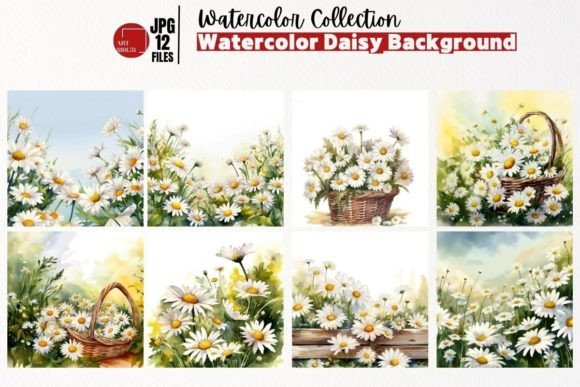
Watercolor Daisy Background JPG for Craft Backgrounds
As a handmade business owner who has spent years navigating the intersection of digital design and physical crafting, I approach every new graphic design asset with a healthy dose of skepticism. When I first opened the Watercolor Daisy Background JPG file on my studio monitor, I wasn't just looking for pretty flowers; I was evaluating a potential workhorse for my upcoming spring collection. The immediate impression was one of soft, organic elegance. Unlike the harsh, high-contrast vector art that often dominates the creative marketplace, this illustration carries a gentle, hand-painted authenticity. It evokes a mood that is simultaneously nostalgic and fresh, striking a balance between cottagecore rustic charm and modern feminine minimalism. For Etsy shop owners and craft fair vendors, this specific aesthetic targets a buyer demographic that values artisanal quality over mass-produced perfection. It feels premium yet accessible, making it an ideal candidate for products that need to whisper "handmade" rather than shout it.
Real-World Applications for Sublimation and Print Products
In my current workflow, I am preparing a batch of 20oz skinny tumblers and matching greeting cards for a local spring market. This is where the Watercolor Daisy Background JPG truly shines as a sublimation design asset. Because watercolor relies on subtle gradients and texture, it translates beautifully onto coated ceramics and polyester fabrics. I tested this file as a full-wrap tumbler design, and the daisy pattern maintained its integrity without banding or pixelation, which is a common failure point with lower-resolution backgrounds. For those running a print-on-demand business or creating in-house inventory, this file serves as an excellent base layer. It provides enough visual interest to stand alone but remains soft enough to allow overlaid text to remain legible.
Beyond sublimation, this asset is a staple for printable design projects. I utilized it as a backdrop for a set of digital planner stickers and printable wall art. The beauty of using a high-quality JPG for printables is the color consistency; what you see on screen is generally what comes out of the inkjet printer, provided your color profile is calibrated. For sticker design, specifically die-cut vinyl stickers intended for water bottles and laptops, this background offers a vibrant canvas. However, unlike a solid color fill, the watercolor texture adds depth that makes the final product look more expensive. Small business branding also benefits here; I can easily crop sections of this daisy background to create cohesive thank-you cards, packaging inserts, and social media templates that tie my entire shop aesthetic together.
Navigating Technical Limitations for Cricut and Silhouette Users
While this Watercolor Daisy Background JPG is a powerhouse for printing and sublimation, crafters using cutting machines must manage their expectations. As an experienced Cricut user, I have to be honest: this is not a cut file. If you are hoping to load this directly into Design Space or Silhouette Studio for intricate vinyl layering, you will face challenges. Watercolor edges are inherently soft and blended, lacking the crisp, high-contrast boundaries that auto-trace features require. Attempting to cut detailed daisy petals from this JPG will likely result in jagged edges or machine errors.
However, do not dismiss this asset for your Cricut project or Silhouette project entirely. It excels when used as a Print Then Cut element. I successfully created custom gift tags by printing the daisy background onto cardstock and then using my Cricut to cut a simple oval shape around it. The key is to let the machine handle the outer contour while letting the printer handle the internal detail. Avoid using this file for very small cutting details, thin lines, or layered vinyl projects where registration marks might get lost in the floral pattern. If you need individual daisies for layering, you should seek out a dedicated SVG design or trace specific high-contrast areas manually. Always preview PNG transparency if you plan to remove the background digitally, though keeping the textured paper grain often enhances the handmade feel.
Strategic Pairing and Product Mockup Integration
A standalone background rarely sells a product; context does. When incorporating the Watercolor Daisy Background JPG into my shop listings, font pairing became critical. The organic, flowing nature of the daisies demands typography that complements rather than competes. I found that delicate serif fonts and clean sans serifs worked best for readability, while bold display fonts created a striking contrast for t-shirt design headers. Avoid overly distressed grunge fonts, as they clash with the softness of the watercolor medium. Handwritten script fonts pair naturally, reinforcing the personal touch required for wedding stationery or personalized gifts.
Furthermore, never list a digital product or physical item without placing it on a real product mockup. I used this background to create mockups for tote bags and mug designs before I even produced the physical samples. This allowed me to test market interest and refine the layout based on visual feedback. For creative entrepreneurs, this step saves time and materials. Ensure you resize the asset appropriately for different products; a layout that works for a large tumbler wrap may look sparse on a small gift tag. Simplify the composition if necessary by masking out busy areas to create negative space for customer names or custom dates.
Essential Pre-Launch Checklist for Handmade Sellers
Before you commit this Watercolor Daisy Background JPG to a commercial run or list it as part of a design bundle, run through this practical crafter’s checklist. These steps have saved my small business from costly reprints and copyright headaches:
- Test Print Colors: Watercolor yellows and greens can shift between RGB screens and CMYK printers. Always print a test swatch on your actual production paper or transfer paper to confirm color accuracy.
- Verify Commercial License: Just because a file is available doesn't mean it's cleared for your specific use case. Confirm the commercial license allows for both physical end products and digital printable sales if that is your business model.
- Check Resolution for Scale: Zoom in to 100% to inspect for artifacts. If you plan to use this for large format items like shower curtains or blankets, ensure the DPI supports that size without blurring.
- Contrast Check: Test the background with white text and dark text. Some watercolor washes are too light for white text to be readable, requiring a semi-transparent overlay box.
- Mockup Reality Check: Does the design look good on both white and colored substrates? Watercolors can disappear on cream-colored fabrics or look muddy on dark garments unless adjusted.
- File Organization: Keep your master JPG safe and create working copies for editing. Never overwrite your original high-res asset when experimenting with filters or cropping.
Ultimately, the Watercolor Daisy Background JPG is a versatile tool for the thoughtful maker. It bridges the gap between digital convenience and traditional artistry, offering a shortcut to professional-looking results without sacrificing the soul of handmade goods. Whether you are designing for a bustling Etsy product line, preparing for a weekend craft fair, or simply elevating your personal DIY projects, this asset brings a breath of fresh air to your creative workflow. By understanding its strengths in print and its limitations in cutting, you can leverage this beautiful background to build a cohesive, profitable, and aesthetically pleasing handmade brand.